Buying land is a major financial decision, and checking the right documents before completing the transaction is one of the most important ways to protect your investment. A property may look genuine and the seller may appear trustworthy, but proper documentation is essential before committing your money.
Whether you are buying land for a home, farming, commercial development, or investment, you should carefully verify the property’s ownership, boundaries, restrictions, and transaction history.
Knowing the documents to check before buying land in Kenya can help you identify potential problems early and make a more informed decision.
This guide highlights important documents and records that buyers should consider reviewing during the land-buying process.
1. Title Deed
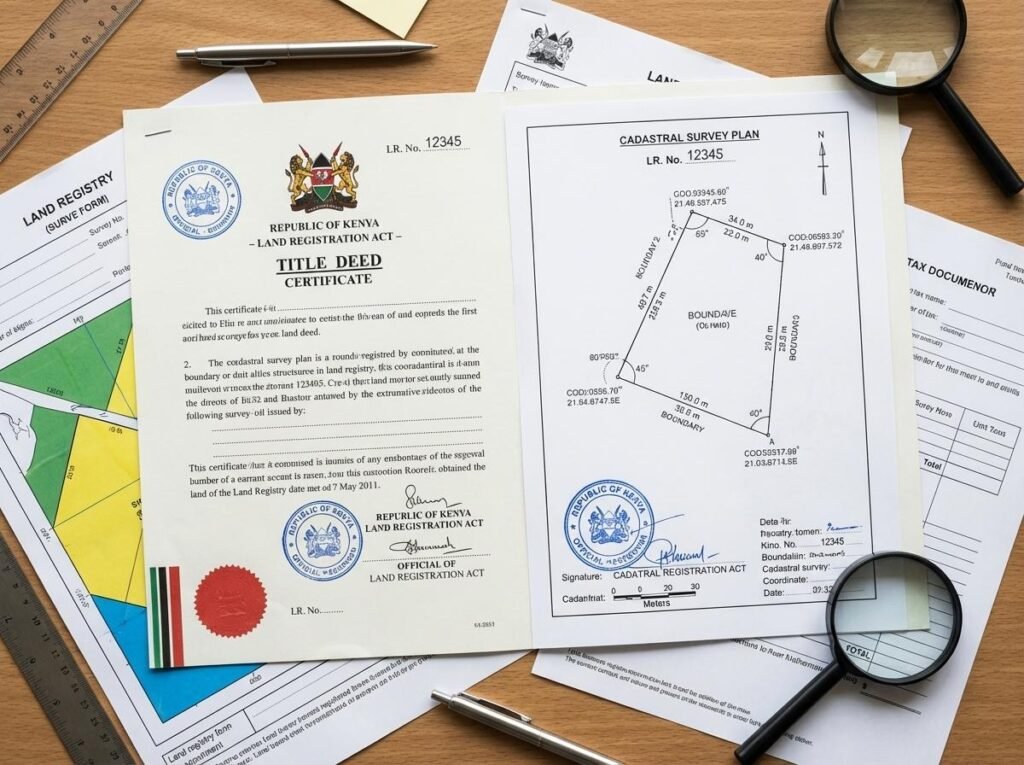
The title deed is one of the most important documents associated with land ownership. Before purchasing, examine the title information and confirm that the details correspond with the property being offered for sale.
Check information such as:
- Registered owner’s name
- Parcel number
- Land size
- Location
- Tenure
- Any registered interests or restrictions
Do not rely only on a photocopy or photograph provided by the seller. The information should be independently verified through the relevant official land records.
2. Official Land Search
An official land search is a crucial part of property due diligence. It can help confirm the registered ownership of the property and reveal registered interests that could affect the transaction.
Depending on the circumstances, a search may reveal issues such as:
- Charges
- Cautions
- Restrictions
- Other registered interests
The information obtained should be compared with the documents presented by the seller.
3. Survey Documents
Survey records are important when confirming the location and boundaries of a parcel.
A qualified surveyor can help establish whether the land on the ground corresponds with the relevant survey information.
Survey verification can help identify potential:
- Boundary disputes
- Encroachments
- Incorrect measurements
- Location discrepancies
This is particularly important when purchasing large parcels or land that has been subdivided.
4. Mutation or Subdivision Documents
If the land originated from a larger parcel, check the relevant subdivision or mutation documentation. These records can help establish how the original parcel was divided and how the specific portion being sold was created.
This is especially important when buying plots in newly developed or subdivided areas.
5. Land Rates and Rent Records
Depending on the property’s tenure and location, there may be land rates or land rent obligations. Ask for evidence that applicable obligations have been addressed and establish whether there are outstanding amounts associated with the property.
Unresolved liabilities can create complications during a property transaction.
6. Seller’s Identification Documents
Verify the identity of the person selling the land. The seller’s identification details should correspond with the ownership information and transaction documentation.
If the registered owner is represented by another person, request documentation showing that the representative has the appropriate authority to act.
7. Sale Agreement
A written sale agreement should clearly document the terms agreed between the buyer and seller.
It should address important matters such as:
- Purchase price
- Payment schedule
- Property description
- Completion conditions
- Responsibilities of the parties
- Transfer arrangements
- Default provisions
A qualified property lawyer can help prepare or review the agreement before it is signed.
8. Consent or Approval Documents Where Applicable
Some land transactions may require specific consents or approvals depending on the type of property, location, tenure, or transaction involved.
Before proceeding, establish whether any required consent or approval applies to the particular transaction.
Professional legal advice can help determine the requirements for your specific purchase.
9. Transfer Documents
The transfer documentation is important because it facilitates the legal change of ownership from the seller to the buyer.
Before signing or submitting transfer documents, ensure that the information is accurate and consistent with the property’s official records and the sale agreement.
A lawyer can assist with the transfer process and related documentation.
10. Property Rates and Other Supporting Records
Depending on the property, additional records may be relevant to the transaction.
These may include:
- Rates clearance documentation
- Land rent clearance documentation where applicable
- Planning information
- Survey records
- Development approvals where relevant
- Estate or management documentation
The exact documents required can vary depending on the property and transaction.
Why Document Verification Matters
Checking documents is not simply a formality. It can help protect buyers from serious financial and legal problems.
Proper verification can help you:
- Confirm ownership
- Identify registered claims
- Verify land boundaries
- Discover outstanding obligations
- Confirm the seller’s authority
- Understand the property’s legal status
Never allow pressure from a seller or agent to make you skip due diligence.
Common Mistakes Buyers Should Avoid
When purchasing land, avoid:
- Paying before conducting due diligence
- Relying solely on a title deed copy
- Skipping an official land search
- Failing to verify boundaries
- Accepting verbal agreements
- Ignoring outstanding obligations
- Using unqualified professionals
- Rushing because of a supposedly limited-time offer
Taking additional time to verify documents can save you from significant problems later.
Use Just Homes to Find Property
Finding potential land opportunities is easier when you have access to property listings in one place.
Just Homes allows buyers to explore property listings and connect with real estate professionals. You can use the platform to identify properties that match your preferred location, budget, and investment objectives.
However, an online listing is only the beginning of the buying process. Once you identify a property, carry out the necessary independent due diligence and document verification before making a purchase.
Final Thoughts
Knowing the documents to check before buying land in Kenya is essential for anyone planning a land purchase. The title deed, official land search, survey records, sale agreement, seller identification, and relevant clearance or approval documents can all play an important role in establishing the property’s ownership and legal status.
Every transaction is different, so buyers should obtain appropriate professional advice based on the specific property and circumstances.
Do not rush into a land purchase simply because the property appears attractive or the seller offers a favorable price. Proper document verification, physical inspection, boundary confirmation, and professional legal guidance can help you make a safer and more informed investment.
Call-to-Action
Looking for land or property in Kenya? Explore available listings on Just Homes and find properties that match your location, budget, and investment goals. Connect with real estate professionals and begin your property search today—then carry out the necessary due diligence before making a purchase.