
Buying land is a major investment, and therefore, it is important to approach the process carefully, especially if you are purchasing property for the first time. In Kenya, land can be purchased for building a home, farming, business development, or long-term investment; however, the process involves several important legal and practical checks. Moreover, because land transactions can involve significant amounts of money, failing to verify ownership or property details can result in serious financial problems. Consequently, before making any payment, buyers should understand the process, verify the land, and work with the right professionals. Therefore, understanding How to Buy Land in Kenya Safely: A Complete Guide for First-Time Buyers is essential before committing your money.
1. Determine Why You Want to Buy Land
Before you begin searching for land, first determine exactly why you want to purchase it.
For example, you may want land for constructing a family home, developing rental apartments, starting a business, farming, or holding it as an investment. Similarly, different purposes require different locations, sizes, infrastructure, and budgets.
Therefore, clearly defining your objective will help you narrow your search. In addition, consider whether you need access to roads, electricity, water, schools, hospitals, shopping centers, or public transportation.
As a result, you will be more likely to choose land that meets both your current needs and your future plans.
2. Set a Realistic Land Buying Budget
Once you know what you want to use the land for, establish a realistic budget.
However, remember that the purchase price is not necessarily the only expense involved. Depending on the transaction, you may also need to budget for professional services, searches, surveys, valuation, registration, transfer-related costs, and other applicable charges.
Therefore, avoid using your entire budget on the advertised land price.
Moreover, compare prices for similar parcels in the same location. If one property is significantly cheaper than comparable land, investigate why before proceeding.
In other words, an unusually low price should encourage additional due diligence rather than an immediate purchase.
3. Choose the Right Location
Location is one of the most important factors when buying land in Kenya.
For instance, if you intend to build a home, you may prioritize a quiet neighborhood with good roads, security, schools, and access to essential services. On the other hand, someone purchasing commercial land may prioritize traffic, visibility, accessibility, and proximity to business centers.
Furthermore, consider future development in the surrounding area. New roads, residential developments, commercial centers, schools, and other infrastructure can potentially influence the usefulness and value of land.
Therefore, do not choose land based solely on the current price. Instead, consider both the present conditions and the property’s long-term potential.
4. Physically Visit the Property
After identifying a potential property, arrange a physical site visit.
Although photographs and online listings can help you discover land, they cannot replace an actual inspection. For example, photographs may not clearly show access roads, neighboring developments, drainage, terrain, boundaries, or other important features.
Therefore, visit the property yourself before making a commitment.
In addition, visit the surrounding area and speak with people familiar with the location where appropriate. Consequently, you may discover useful information that was not included in the advertisement.
5. Conduct an Official Land Search
One of the most important steps in the land-buying process is conducting an official land search through the appropriate government land records system or land registry.
The purpose is to establish important information about the parcel, including the registered ownership and whether there are registered interests affecting the land.
Therefore, do not rely solely on documents provided by the seller.
Moreover, the information obtained through an official search can help you identify potential issues before proceeding with the transaction.
If the seller discourages you from conducting an independent search, that should be treated as a warning sign.
6. Verify the Title Deed
The title deed is a crucial document in a land transaction. However, simply seeing a title document does not mean that you should immediately proceed with the purchase.
Instead, the title information should be checked against official land records.
For example, confirm that the registered owner corresponds with the person selling the property and investigate whether there are restrictions, cautions, charges, or other registered interests affecting the land.
Furthermore, if the seller’s information does not match the official records, stop and seek professional advice before proceeding.
Consequently, proper title verification can help reduce the risk of purchasing land from someone who does not have the authority to sell it.
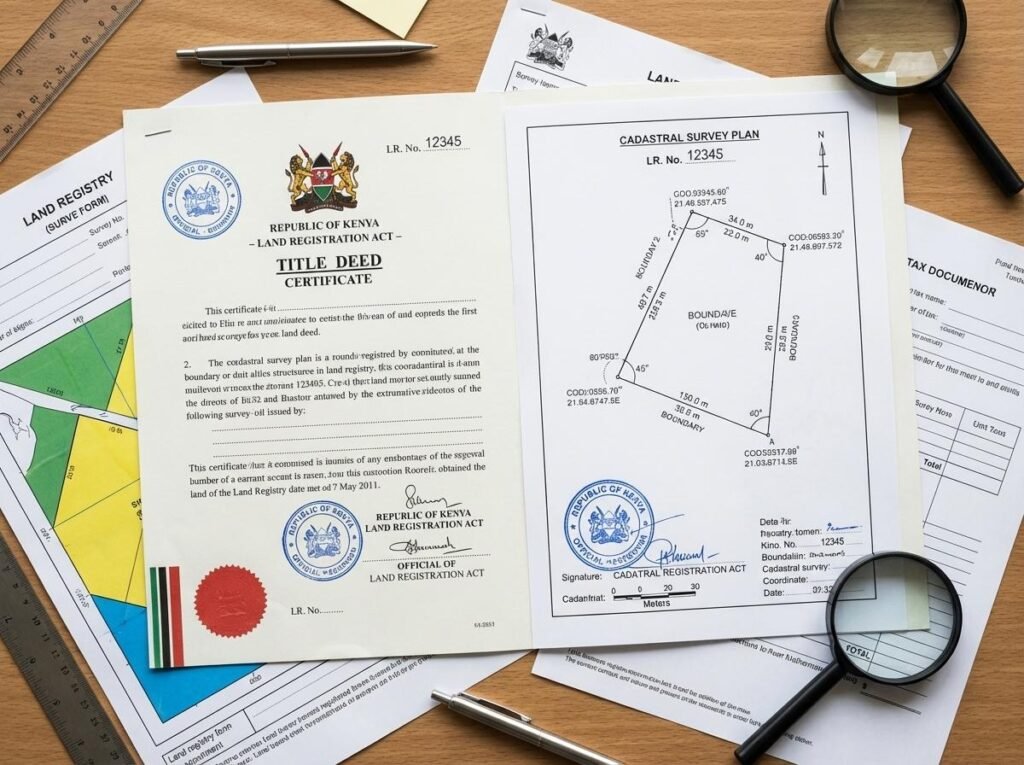
7. Confirm the Land Boundaries
Boundary verification is another important step that first-time buyers should not overlook.
For instance, the land on the ground should correspond with the relevant survey information and documentation. Therefore, consider engaging a qualified surveyor to identify and confirm the property’s boundaries.
Moreover, a professional survey can help identify potential boundary disputes or discrepancies before the purchase is completed.
This is particularly important when buying large parcels, subdivided land, or land in areas where boundaries may not be clearly marked.
8. Check for Existing Disputes or Restrictions
Before purchasing land, investigate whether there are disputes or restrictions affecting the property.
For example, there may be disagreements involving neighboring owners, inheritance issues, family claims, court cases, restrictions, cautions, or other interests.
Therefore, never assume that a seller’s verbal assurance is sufficient.
Instead, conduct appropriate searches and obtain professional advice where necessary. In addition, ask relevant questions about the history of the property.
As a result, you can identify potential problems before committing your money.
9. Work With a Qualified Property Lawyer
Because land transactions involve legal documents and ownership rights, working with a qualified property lawyer can be extremely valuable.
A lawyer can help you review the title information, prepare or review the sale agreement, explain the transaction terms, and guide you through the transfer process.
Furthermore, a lawyer can help identify legal issues that an inexperienced buyer may overlook.
Therefore, although professional services involve additional costs, they can provide valuable protection when making a significant investment.
10. Use a Written Sale Agreement
Once you have completed the necessary checks and decided to proceed, ensure that the transaction is properly documented.
A written sale agreement should clearly explain important terms, including the purchase price, payment arrangements, obligations of the parties, completion conditions, and other relevant details.
Moreover, both the buyer and seller should understand the agreement before signing it.
Never rely entirely on verbal promises. Instead, ensure that important commitments are properly documented.
Consequently, a clear agreement can reduce misunderstandings and provide a reference if disagreements arise later.
11. Be Careful With Payments
Payment is one of the areas where first-time buyers should exercise particular caution.
For example, avoid sending large sums of money simply because a seller claims that another buyer is interested.
Instead, follow the payment terms contained in the agreement and seek professional guidance where necessary.
Furthermore, maintain clear records of every payment you make. Keep receipts, transaction confirmations, correspondence, and copies of relevant documents.
As a result, you will have a clear financial record of the transaction.
12. Complete the Land Transfer Properly
After the sale agreement and required conditions have been satisfied, the ownership transfer process can proceed.
However, the exact requirements and procedures can vary depending on the property and circumstances. Therefore, buyers should work with the relevant professionals and authorities to ensure the required documentation and registration steps are completed correctly.
Moreover, do not assume that possession of documents or physical occupation alone means that the ownership transfer is complete.
Instead, confirm that the transaction has been properly registered.
Common Mistakes to Avoid When Buying Land in Kenya
First-time buyers can sometimes make avoidable mistakes because they are eager to secure a property.
Some common mistakes include:
- Buying land without conducting an official search.
- Failing to verify the seller’s identity and ownership.
- Relying only on a title document presented by the seller.
- Ignoring boundary verification.
- Paying before completing proper due diligence.
- Choosing land solely because it is cheap.
- Failing to use a qualified lawyer or surveyor.
- Signing an agreement without understanding its terms.
- Ignoring existing disputes or restrictions.
- Relying entirely on verbal promises.
Therefore, taking your time can be far more valuable than rushing into a transaction.
How Just Homes Can Help
Finding suitable property is easier when buyers can compare available listings and research different locations. JustHomes provides a platform where people can explore property opportunities and make more informed decisions during their property search. Moreover, buyers can use property listings as a starting point for comparing locations, property types, and available opportunities.
Nevertheless, regardless of where you find a property, remember that independent due diligence remains essential before purchasing land.
Final Thoughts
Buying land can be a valuable long-term investment; however, it should never be treated as a transaction that can be completed without proper verification.
First, establish your purpose and budget. Next, choose a suitable location and inspect the property physically. Then, conduct an official land search, verify the title, confirm boundaries, and investigate potential disputes or restrictions.
Furthermore, work with qualified professionals, use a written sale agreement, keep detailed payment records, and ensure the transfer is properly completed.
Ultimately, learning how to buy land in Kenya safely is about being patient, conducting proper due diligence, and making decisions based on verified information rather than pressure or promises.
Call to Action
Looking for land or other property opportunities in Kenya? Explore Just Homes to discover available property listings and compare opportunities in different locations. However, before making a purchase, remember to conduct proper due diligence, verify ownership, inspect the property, and seek professional advice where necessary. Start your property search with Just Homes and take the next step toward finding the right property for your future.